
Early identification is always a plus in the fight against oral cancer. While regular dental checkups are undeniably important, you can also take charge of your oral health by incorporating simple self-checks into your daily routine. The good thing is, you can do most of the check for oral cancer right in your own bathroom, making them a convenient addition to your daily habits.
By being vigilant and proactive, you can monitor your oral health more closely and identify any potential issues early on. This proactive approach not only aids in the early detection of oral cancer but also helps you stay attuned to any changes or abnormalities in your mouth, allowing you to seek professional advice promptly. In today’s blog, we will explore the steps and techniques for conducting these self-checks, empowering you to take an active role in maintaining your oral health and well-being.
Read below to know 5 easy ways to check for oral cancer at home:
Don’t Let Oral Cancer Sneak Up on You: 5 Easy Bathroom Checks
Visual Inspection
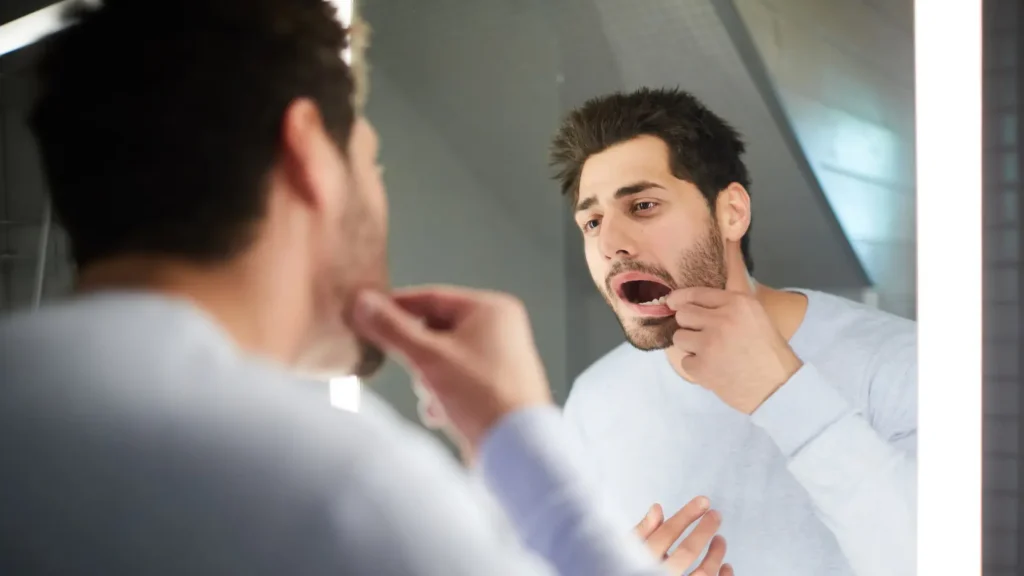
This is the first and easiest step. Stand in front of a well-lit bathroom mirror and tilt your head back slightly. Open your mouth wide and examine all surfaces, including your tongue, lips, cheeks, gums, and the roof of your mouth. Look for any unusual changes, such as:
- Red, white, or speckled patches
- Sores or ulcers that don’t heal within two weeks
- Lumps or bumps
- Unusual bleeding
- Loose teeth or changes in the way your dentures fit
Feel for Bumps or Lumps
Gently feel all around your mouth, including your lips, cheeks, and the floor of your mouth, for any lumps or bumps that weren’t there before. Pay particular attention to the areas under your jaw and around your lymph nodes.
Check Your Tongue
Stick out your tongue and carefully examine its top, sides, and underside for any noticeable changes in color, texture, or mobility. Additionally, look for sores, ulcers, or patches that appear different from the rest of your tongue. These irregularities might include white or red patches, which could potentially indicate precancerous conditions like leukoplakia or erythroplakia.
Also, pay attention to any areas that feel different when you touch them or any persistent pain or tenderness that doesn’t seem to go away. It’s important to note any changes in how your tongue moves or feels when you talk or eat, as restricted movement or discomfort can be early signs of issues.
Examine Your Gums
Pull down your lower lip and lift your upper lip to examine your gums. Healthy gums should be pink and firm. Look for any areas of redness, swelling, or bleeding. Look for any changes in texture, such as gums that seem overly smooth or shiny, which might indicate inflammation. Pay attention to any recession of the gum line, where the gums pull away from the teeth, exposing more of the tooth or even the root. This can be a sign of periodontal disease. Additionally, check for any unusual lumps, bumps, or growths on your gums, as these can sometimes be indicators of more serious conditions, including oral cancer.
Oral Cancer Screening Test (Optional)
While not as readily available as the previous methods, going through a check for oral cancer can be further enhanced with self-screening tests. These tests, typically involving a brush or swab, can be used to collect cells from suspicious areas in your mouth. The collected cells are then sent to a lab for analysis. Discuss the availability and potential benefits of such tests with your dentist.
These self-checks are not a substitute for regular dental visits. It’s vital to schedule professional checkups at least once a year, even if you don’t experience any symptoms. Your dentist has the expertise and tools for a more thorough examination, including screenings for oral cancer.
Here are some additional points to keep in mind!
- Early signs are often painless: Don’t ignore any unusual changes in your mouth, even if they don’t cause discomfort.
- Don’t self-diagnose: If you notice any suspicious changes during your self-check, checking for oral cancer should be followed by a visit to your dentist. They can perform a more comprehensive examination and determine the cause of the changes.
- Lifestyle choices matter: Smoking, excessive alcohol consumption, and exposure to the human papillomavirus (HPV) can increase your risk of oral cancer. Making healthy lifestyle choices can help reduce your risk.
Ultimately, taking charge of your oral health is empowering. By incorporating these simple self-checks into your routine, you can significantly increase your awareness of potential changes within your mouth, thereby facilitating early detection of oral cancer. Indeed, early detection is crucial for successful treatment. Consequently, make these self-checks a consistent part of your daily routine, just like brushing and flossing.
Don’t hesitate to schedule a dental appointment if you notice anything unusual during your self-examination. By practicing proactive oral health care, you can play a significant role in safeguarding your well-being.
Trending FAQs On Oral Cancer Check!
1. Can I Really Check My Mouth with a Mirror for Oral Cancer Screening?
Absolutely! While not a replacement for dental checkups, a well-lit bathroom mirror can be a powerful tool for noticing potential signs of oral cancer. Look for changes in color, texture, or unusual bumps during your routine.
2. What Should I Be Looking For In Terms of Oral Check at Home (Symptoms)?
Keep an eye out for red, white, or speckled patches in your mouth. Sores that don’t heal within two weeks, lumps, unusual bleeding, or loose teeth can also be warning signs. Early detection is key!
3. Can I Do This While Brushing My Teeth?
Yes! Incorporate a quick oral cancer check into your regular brushing routine. Shine a light in your mouth, stick out your tongue, and feel around for any lumps or bumps. It takes just a few extra seconds to be proactive.
4. Are There Other Ways to Check for Oral Cancer at Home?
While not as common, self-screening tests involving swabs or brushes can be used to collect cells from suspicious areas in your mouth. Discuss these options with your dentist to see if they’re right for you.
5. What Should I Do Next?
If you notice any unusual changes in your mouth during your self-check, don’t hesitate to schedule an appointment with your dentist. Early detection and treatment are crucial for successful outcomes.