

Imagine this: you’re enjoying a quiet evening at home, maybe watching your favorite show or reading a book, when suddenly, a sharp, throbbing pain erupts in your tooth. It’s a toothache, and it’s severe. It’s not just an annoying twinge. It’s excruciating, making it impossible to concentrate on anything else. Whether it’s from a hidden cavity or a recent trauma, severe tooth pain can strike when you least expect it and turn your day upside down.
The first thing you should know: relief is possible, even before you can get professional care. Knowing how to manage the pain until you can see a dentist is essential for maintaining your comfort. In this blog, we’ll cover some quick home remedies, what to avoid, and when to seek emergency dental help. Let’s dive in and discuss how to relieve that severe toothache.
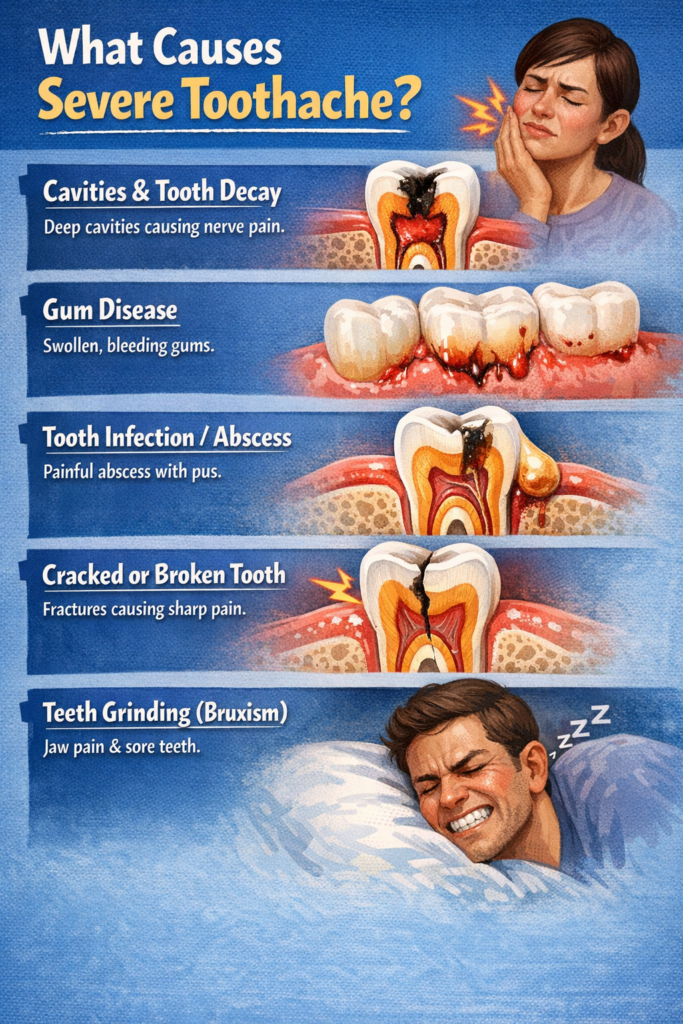
What Causes Severe Toothache?
To truly understand how to relieve a severe toothache, it’s essential to know what might be causing the pain. Severe toothaches can be caused by several factors, including cavities, infections, gum disease, or even trauma. Here are some of the most common culprits:
1. Cavities and Tooth Decay
Cavities are a frequent cause of tooth pain. When decay penetrates through the enamel and into the inner layers of your tooth, it can cause sharp, intense pain. The deeper the cavity, the more severe the pain becomes, especially when the decay reaches the nerves.
2. Gum Disease
Gum disease, or periodontal disease, often starts with inflammation and bleeding of the gums. As the infection progresses, it can lead to pain and swelling that affects the teeth, causing discomfort. In advanced stages, gum disease can lead to tooth loss.
3. Tooth Infection or Abscess
A dental abscess is an infection at the root of a tooth, often caused by untreated cavities or injury. The pus buildup can press against the tooth’s nerve, resulting in throbbing, excruciating pain. Infections can spread to surrounding tissues, so it’s important to address them quickly.
4. Tooth Fractures or Cracks
A crack or fracture in the tooth can expose the sensitive inner layers, leading to sharp pain, especially when chewing or drinking something hot or cold. This type of pain is often sudden and intense.
5. Teeth Grinding or Clenching
Sometimes, tooth pain is related to excessive pressure on your teeth due to grinding or clenching. This can happen at night, leading to sore teeth, jaw pain, and headaches. It may not seem like a dental emergency, but the discomfort can make your daily life challenging.
When to Seek Immediate Care
Severe pain that comes on suddenly, especially if accompanied by swelling, fever, or difficulty swallowing, may indicate an infection or abscess, which requires immediate attention from an emergency dentist in Richmond. If you’re experiencing intense pain that doesn’t improve with over-the-counter painkillers, it’s time to seek professional help.
Immediate Home Remedies to Alleviate Pain
A severe toothache can be agonizing, but several home remedies can offer temporary relief until you can get to the dentist. Here are some effective techniques that can help reduce pain and discomfort:
1. Saltwater Rinse
A saltwater rinse is a simple yet effective remedy that many people use to alleviate toothache pain. When you mix a teaspoon of salt into a glass of warm water, it creates a natural disinfectant that can help cleanse the affected area. The saltwater helps reduce inflammation, flushes out bacteria, and provides soothing relief to the gums and the tooth.
How it Works: Saltwater is known for its antibacterial properties. When used as a rinse, it can help reduce swelling and promote healing of the gums. It also helps to dislodge food particles that may be stuck between the teeth, which can sometimes cause or worsen the pain.
How to Use: Simply mix one teaspoon of salt in a cup of warm water and swish it around in your mouth for 30 seconds. Repeat this process 2-3 times a day, especially after meals, to maintain cleanliness and prevent further irritation. Avoid swallowing the solution, as it’s meant to cleanse the mouth.
While a saltwater rinse is great for temporarily soothing pain, it’s essential to remember that it’s not a permanent solution. It’s a good idea to follow up with professional dental care to address the underlying cause of the pain.
2. Cold Compress
Applying a cold compress to the outside of your cheek near the sore tooth can provide immediate relief for toothache pain. The cold constricts blood vessels, helping to numb the area and reduce swelling and inflammation. This is especially helpful if your toothache is caused by inflammation or injury.
How it Works: The cold compress works by numbing the area, reducing the throbbing sensation that often accompanies severe tooth pain. It also reduces blood flow to the affected area, which helps to manage swelling, giving you some relief until you can get dental treatment.
How to Use: Wrap ice or a cold pack in a clean cloth (never apply ice directly to the skin) and place it on your cheek near the painful tooth. Hold it there for 15-20 minutes at a time. Be sure to take breaks between applications to avoid damaging your skin. Apply the compress several times a day for relief.
While a cold compress can provide temporary pain relief, remember that this is just a short-term fix. If your tooth pain persists, it’s crucial to consult with a professional dentist who can determine the cause of the discomfort and recommend the best course of treatment.
3. Pain Relievers
Over-the-counter pain relievers like ibuprofen or acetaminophen can help manage the pain associated with a toothache. These medications work by reducing inflammation and blocking the pain signals to your brain, providing temporary relief. They are often recommended for short-term use while you await your dentist’s appointment.
How it Works: Ibuprofen (Advil, Motrin) is a non-steroidal anti-inflammatory drug (NSAID) that reduces inflammation and helps alleviate pain. Acetaminophen (Tylenol), on the other hand, works by blocking pain signals in the brain but doesn’t target inflammation as much. Both of these medications can help dull the pain and allow you to get through the day.
How to Use: Always follow the instructions on the packaging for the proper dosage. For ibuprofen, it’s typically taken every 4-6 hours, while acetaminophen is often taken every 4-6 hours as well. Be cautious not to exceed the maximum daily dosage and avoid mixing different types of pain relievers without consulting your doctor.
Pain relievers can help manage the discomfort in the short term, but they don’t treat the root cause of the pain. It’s important to book an appointment with an emergency dentist for a proper diagnosis and treatment.
4. Elevation of the Head
When experiencing a toothache, especially at night, the pain can often feel more intense when lying down. This is due to increased blood flow to the head, which can cause your tooth to throb. Elevating your head while resting can help reduce blood flow to the affected area, potentially easing the pain.
How it Works: Elevating your head prevents blood from pooling in the affected area, which can reduce the pressure and throbbing sensation that intensifies when lying flat. By keeping your head elevated, you help to minimize the intensity of the pain, especially when sleeping or trying to rest.
How to Use: When you’re lying down, make sure to use an extra pillow or two to prop up your head. Aim to keep your head higher than the rest of your body to help minimize the flow of blood to the tooth and gums. This can be especially helpful at night when you’re trying to get some rest despite the pain.
It’s a simple and non-invasive technique that can offer temporary relief while you wait for your dental appointment. However, it’s important to remember that elevating your head will not resolve the underlying issue. Only a dentist can provide the appropriate treatment.
What to Avoid While Waiting for Dental Care
While waiting for your appointment, it’s equally important to avoid certain actions that can make your toothache worse. Here’s what you should steer clear of:
1. Hot or Cold Foods
Extreme temperatures can aggravate tooth pain, especially if the enamel is worn down or the tooth is cracked. Avoid consuming anything too hot or cold, as it may cause a sharp, shooting pain.
2. Chewing on the Affected Side
Even if you’re hungry or thirsty, avoid chewing on the side of your mouth where the pain is located. Biting down can put pressure on the affected tooth and worsen the pain. Stick to softer foods and chew on the opposite side of your mouth.
3. Strong Home Remedies
While some people may try home remedies like clove oil or garlic to numb the pain, these can sometimes make matters worse. They can irritate the gums or cause a burning sensation, leading to more discomfort.
When to Seek Emergency Dental Care
Knowing when to seek immediate help is crucial, especially if the pain becomes unbearable. Here are some signs that indicate you should see an emergency dentist in Richmond right away:
Signs of Infection
If you notice swelling around the tooth, fever, or pus, these are signs that the tooth may be infected. An untreated infection can spread quickly, so it’s important to seek care immediately.
Difficulty Swallowing or Breathing
If the pain is accompanied by difficulty swallowing or breathing, seek emergency care immediately. This could indicate that the infection has spread beyond the tooth and into the surrounding tissues, requiring urgent attention.
Persistent Pain Despite Treatment
If you’ve tried over-the-counter pain relievers and home remedies and the pain hasn’t improved or continues to worsen, it’s time to contact an emergency dentist. Don’t wait for the pain to subside on its own; it could indicate a serious underlying issue.
While managing a severe toothache at home can offer temporary relief, it’s essential to visit a professional as soon as possible. At Inspire Smiles, we understand how excruciating a toothache can be, and we are here to help you get the care you need. Whether you’re dealing with a tooth infection, gum disease, or a cracked tooth, our emergency dental services are available to provide prompt and effective relief.
If you’re in pain, don’t wait. Book an appointment with an emergency dentist at Inspire Smiles today and get the care you deserve. You can reach us at [phone number] or visit our website [link] to schedule your appointment now.
What People Ask
How long can I wait before seeing a dentist for a toothache?
If the pain persists for more than a few hours or worsens, it’s best to see a dentist as soon as possible to avoid further complications.
How often should I apply a cold compress for pain relief?
Apply a cold compress for 15-20 minutes at a time, several times a day. Make sure to take breaks between applications to avoid skin damage.
Can I eat after using a cold compress?
Yes, but stick to soft, lukewarm foods and avoid anything too hot or cold, as this could worsen the pain.
Will chewing on the other side of my mouth help?
Yes, avoiding chewing on the painful side can prevent further irritation and pressure on the affected tooth.
How can I sleep with a toothache at night?
Elevate your head while sleeping to reduce blood flow to the area and minimize throbbing. Using a cold compress before bed can also help.