

Tooth pain can begin as a slight, irritating nuisance but can develop very rapidly into something more complex. A sharp, throbbing sensation or ongoing pressure that worsens is often a sign of an issue deeper in your body and requires immediate medical attention. If you find that your toothache has worsened, the cause may only be remedied by a professional.
Ignoring the pain can lead to more serious dental problems later, such as infections or even tooth loss. Knowing why tooth pain worsens and consulting a qualified professional can help you preserve your oral health. The sooner you see an emergency dentist in Richmond, TX, the sooner you can relieve your symptoms and prevent further issues.
Why Is Tooth Pain Getting Worse?
There are numerous explanations for how tooth pain can intensify with time. Not all of these reasons are created equally, but each one requires immediate action to avoid further damage.
Tooth Decay
The most common cause of worsening tooth pain can be an untreated form of tooth decay. When a cavity develops, it usually starts small, but if left untreated, it may deepen all the way to the center of the tooth, where its pulp resides, resulting in intense pain. Bacteria in the cavity can reach the inner part of the tooth, causing swelling and increasing pain. In the early stages, decay may result in mild discomfort, but as it progresses, it can cause intolerable pain that requires emergency dental assistance.
Abscessed Tooth
An abscess forms when an infection in the tooth or gums results in a pocket of pus that can exert enormous pressure on nearby tissue and nerves. It can result in considerable pain that generally gets worse over time unless treated. It is always better to respond, as negligence can lead to serious infections (abscessed tooth). So don’t forget to consult an emergency dentist in Richmond, TX.
Gum Disease
Gum disease (gingivitis or periodontitis) can also worsen tooth pain. Over time, the disease causes the gums to shrink back, exposing the tooth roots. Such exposure can cause pain, especially when chewing and consuming hot or cold foods and drinks. Infections caused by gum disease can also cause inflammation that intensifies the pain.
Cracked or Broken Tooth
Trauma or biting into something hard can cause a cracked or broken tooth. Originally, the pain isn’t severe, but as the crack extends or the tooth continues to break down, what you have is an unbearable ache. The crack can expose nerves inside the tooth, resulting in greater sensitivity and eventually worsening pain.
Teeth Grinding
If you grind your teeth at night (a condition called bruxism), the continual pressure this exerts on your teeth can also cause pain that worsens over time. This can erode the enamel itself and even create cracks or chips in your teeth, adding to the discomfort. Stress or misalignment can cause teeth grinding, which creates more severe pain as the pressure compounds.
Sinus Infections
As strange as it may seem, sinus infections can cause tooth pain, too. The roots of your upper teeth lie close to the sinuses, and when you have a sinus infection, pressure can be transmitted to your teeth and cause pain. Though this type of pain may seem to emanate from the tooth, it’s actually triggered by sinus congestion. It can still worsen and may also need treatment by a dentist to rule out dental problems.
When to Seek Emergency Care?
Because mild tooth pain can occasionally be treated at home, chronic or increased pain warrants immediate dental attention. However, if your toothache becomes intolerable or is accompanied by other signs, such as fever or swelling, you should visit an emergency dentist in Richmond, TX. Still others experience severe consequences when they neglect these symptoms, including tooth loss or infection spread.
Some indications you should seek emergency care include:
- Severe, steady pain that does not go away
- Lingering hot or cold sensitivity after the stimulus ends
- Swelling or pus near the impacted tooth or gums
- Inability to chew or open your mouth comfortably because of pain
The earlier treatment is sought, the more likely it is that pain can be relieved and further damage avoided.
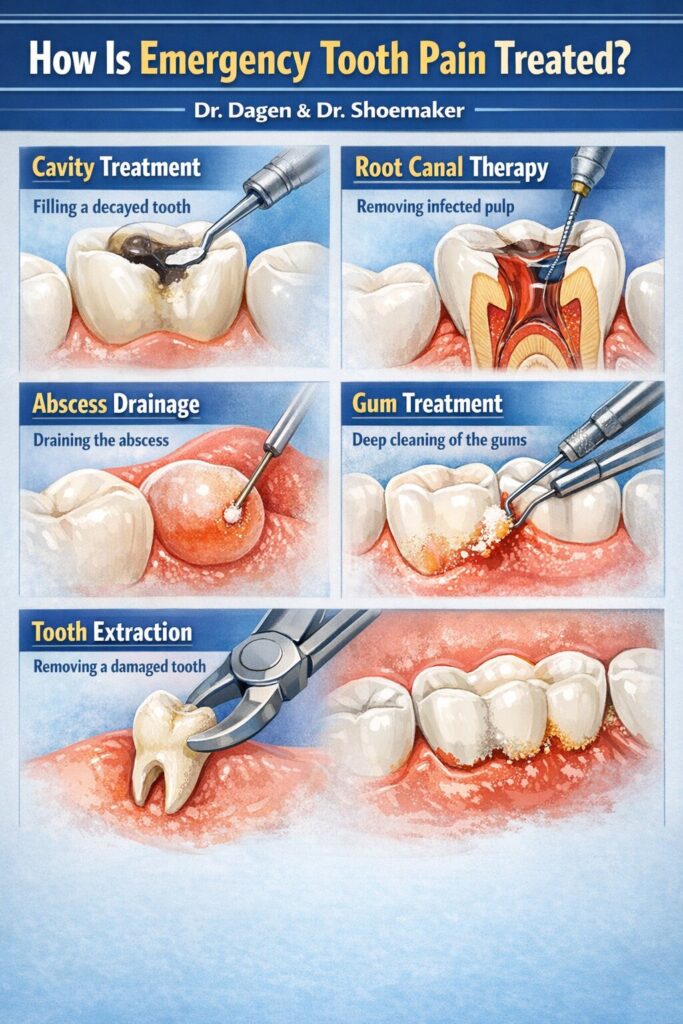
How Is Emergency Tooth Pain Treated?
Treatment for tooth pain will vary according to the underlying cause, so when you visit an emergency dentist for worsening tooth pain, it may depend on Dr. Dagen or Dr. Shoemaker. Common treatment methods include:
- Cavity Treatment: If the cause of your pain is decayed tooth structure, your dentist will remove the decayed portion and place a dental filling to prevent further damage.
- Root Canal Therapy: When infections affect the tooth’s pulp, a root canal may be required to remove the infection and seal the tooth to prevent further issues.
- Abscess Drainage: If the cause of your pain is an abscess, your dentist may need to drain the abscess and prescribe antibiotics to treat the infection.
- Gum Treatment: If the pain is caused by gum disease, your dentist might suggest a deep cleaning (scaling and root planing) or other treatments to reduce inflammation and treat the infection.
- Tooth Extraction: If a tooth is severely damaged or infected, it may need to be extracted to prevent further spread of infection.
How to Stop Tooth Pain From Happening Again
Now you are well on your way to preventing future tooth pain. Performing these simple, effective steps can help protect your teeth from damage, decay, and discomfort.
- Wear a Toothbrush Regularly: Brush your teeth with fluoride toothpaste at least twice daily to remove plaque and prevent cavities.
- Floss Daily: Flossing removes food particles and plaque from the spaces between your teeth, where a toothbrush cannot reach, maintaining your oral hygiene.
- Visit Your Dentist: Regular check-ups and cleanings enable your dentist to detect potential issues early on, before they become a problem for you.
- Wear a Mouthguard: If you grind your teeth at night, this can damage your teeth and lead to jaw pain.
- Eat a Balanced Diet: Eating a healthy diet, especially one high in calcium, helps keep your teeth strong and resistant to decay.
- Don’t Use Tobacco: Smoking or chewing tobacco products can damage your gums and increase your risk of tooth decay.
Source: Dr Tikka
Take Action Today to Protect Your Smile
If your tooth pain is getting worse, you need to get professional care as quickly as you can. While severe or lingering pain can be a nuisance, avoiding treatment could result in more significant dental problems, including infections, abscesses, or even tooth loss. An emergency dentist in Richmond, TX can help you get to the root of your discomfort and provide timely care to restore your oral health.
At Inspire Smiles, we offer instant, trustworthy emergency dental services that relieve your pain and help prevent other complications. Make an appointment to take the first step toward a pain-free smile. Do not wait until the pain can no longer be ignored. We offer support for your relief from dental pain and for the restoration of your dental health, delivered promptly and effectively.
Questions People Ask About Dental Emergency
How can I tell if my tooth pain is from a cavity?
If the pain is sharp or throbbing and worsens with hot or cold food, it could be due to a cavity. Cavities create holes in the tooth, causing pain as they progress deeper. Seek dental care immediately.
Is it normal for tooth pain to come and go?
Tooth pain that fluctuates could indicate an infection or inflammation. It’s common for pain to decrease temporarily, but it will usually return and worsen without treatment. Contact your dentist for an assessment.
What are the symptoms of a tooth abscess?
An abscess typically causes severe pain, swelling, and a fever. You may notice a pimple-like bump on the gums near the painful tooth. If you suspect an abscess, seek immediate dental care to avoid serious infection.
How can I relieve tooth pain until I see a dentist?
Over-the-counter pain relievers such as ibuprofen can help reduce pain and swelling. Applying a cold compress to the outside of the cheek can also provide temporary relief. However, professional treatment is necessary for a long-term solution.
Can a sinus infection cause tooth pain?
Yes, a sinus infection can cause pressure on the upper teeth, leading to pain that mimics a toothache. If you suspect your tooth pain is related to sinus issues, your dentist can help determine the cause.
When should I seek emergency dental care for a toothache?
If your tooth pain is severe, persistent, or accompanied by swelling, fever, or difficulty swallowing, you should seek emergency dental care. Prompt attention can help prevent complications and relieve discomfort.